From a sentence to a live call. No code
Exotel MCP gives any AI agent, Claude, GPT, or Gemini, a direct line into voice, SMS, and WhatsApp. Describe the outcome in plain English. A live voice agent dials, talks, updates your systems, and reports back.
300M+ calls placed · 25B+ interactions / yr ISO 27001 · SOC 2 · PCI-DSS
300 Mn+Calls and 25B+ interactions every year for




/ / The flow
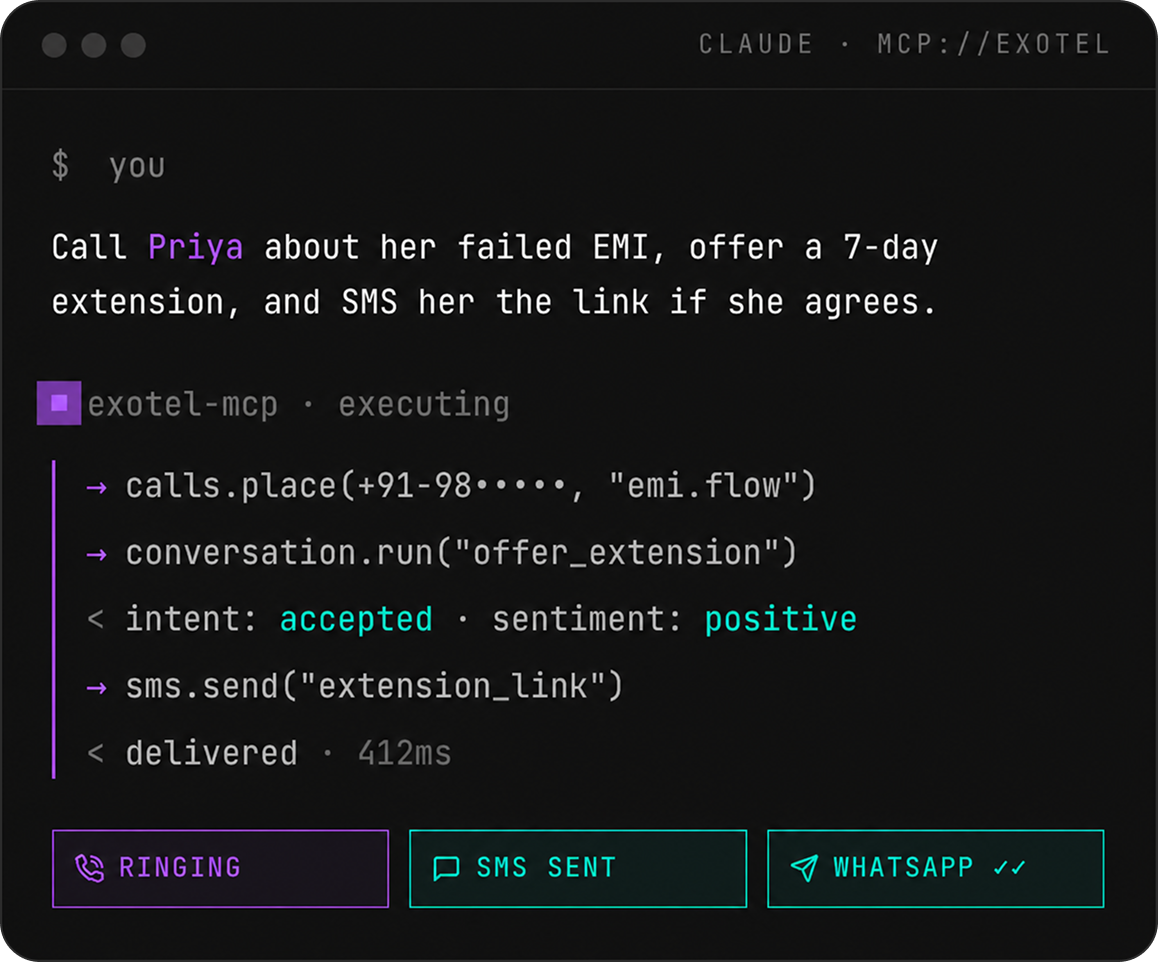
From your chat window to a ringing phone, in one hop.
Watch a prompt travel through your AI assistant, into Exotel MCP, create a voice agent on the go and out to live telephony.
/ / What is MCP?
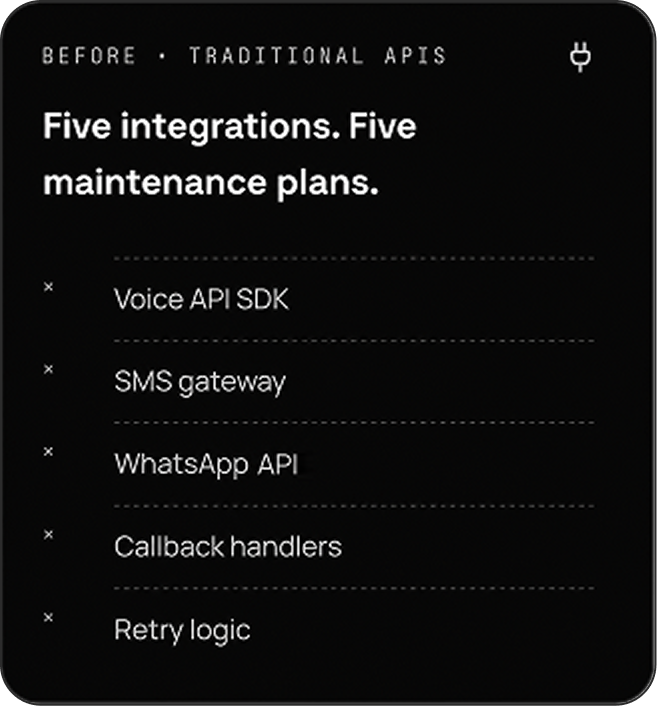
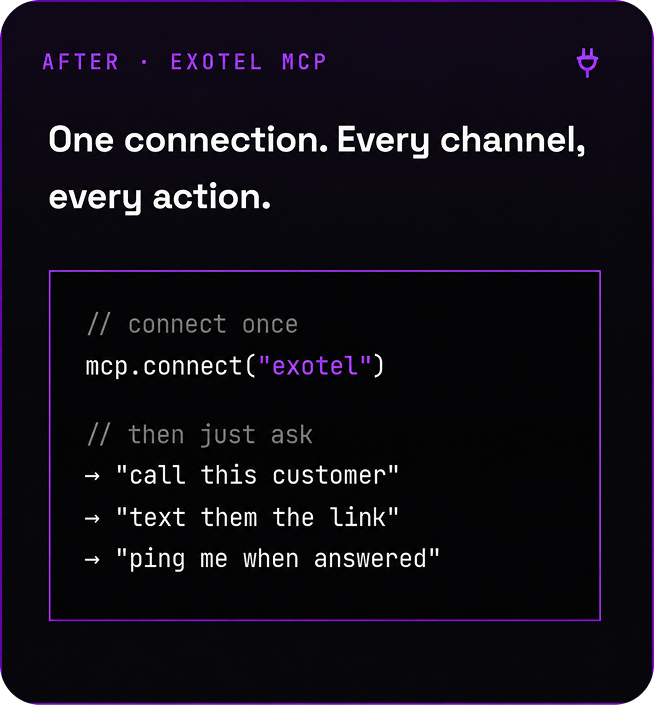
One socket. Every conversation tool.
Model Context Protocol is the open standard that lets AI models discover and call external services through a single interface.
Exotel MCP sits between your AI assistant and our voice and messaging infrastructure.
Setup time
< 1 hr
Custom code
0 lines
Models supported
Any MCP client
Channels
Voice · Messaging
/ / Exotel MCP in Action
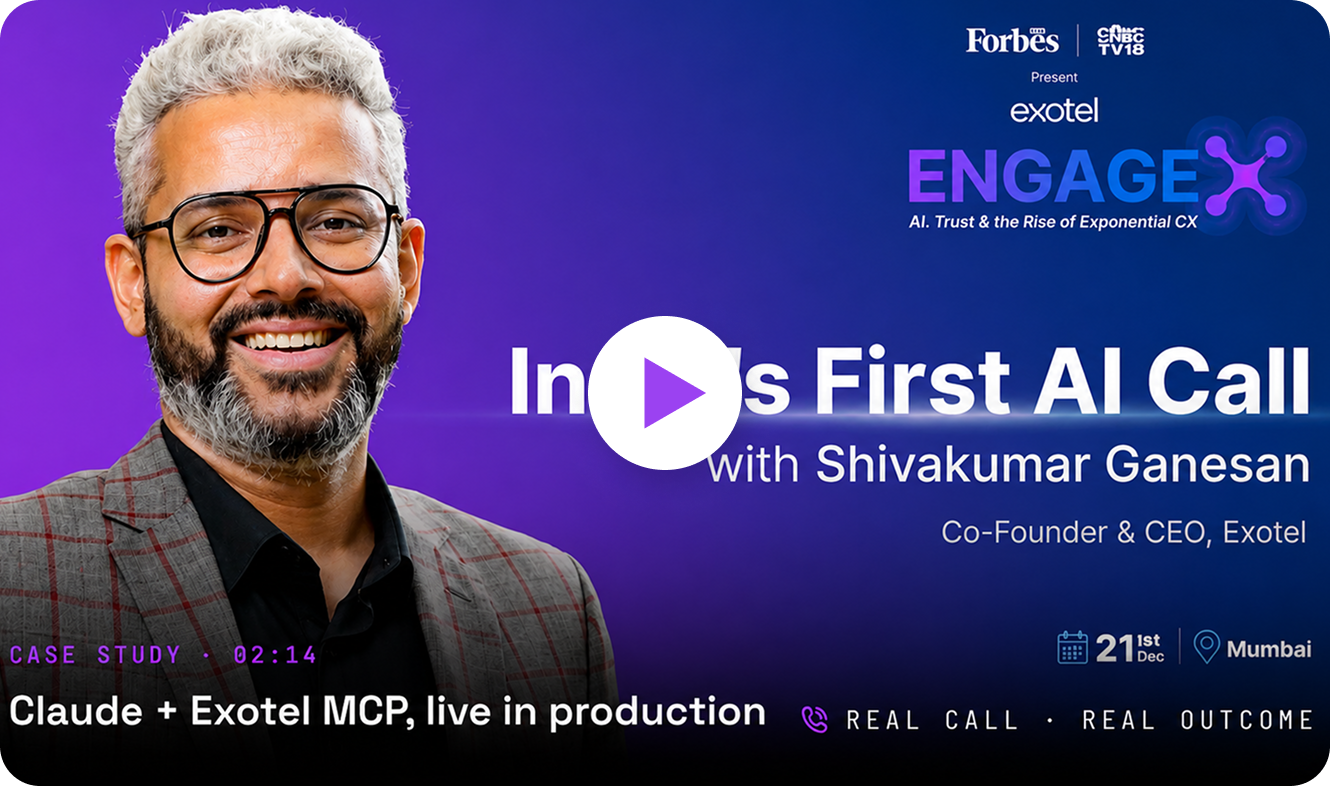
India's first fully agentic AI voice call.
A voice agent built from a plain-language conversation in Claude, running live on Exotel MCP.
Found the customer who needed attention
Placed the call on its own
Held the full conversation
Captured the intent that mattered
Booked the follow-up and logged it in the CRM
No script. No backend build. Just a prompt.
/ / What's in the box
Everything your AI needs to run a real conversation.
Each tile is a capability your agent gets the moment you connect. No SDKs, no glue code, no weekend ops shifts.





/ / Beyond voice
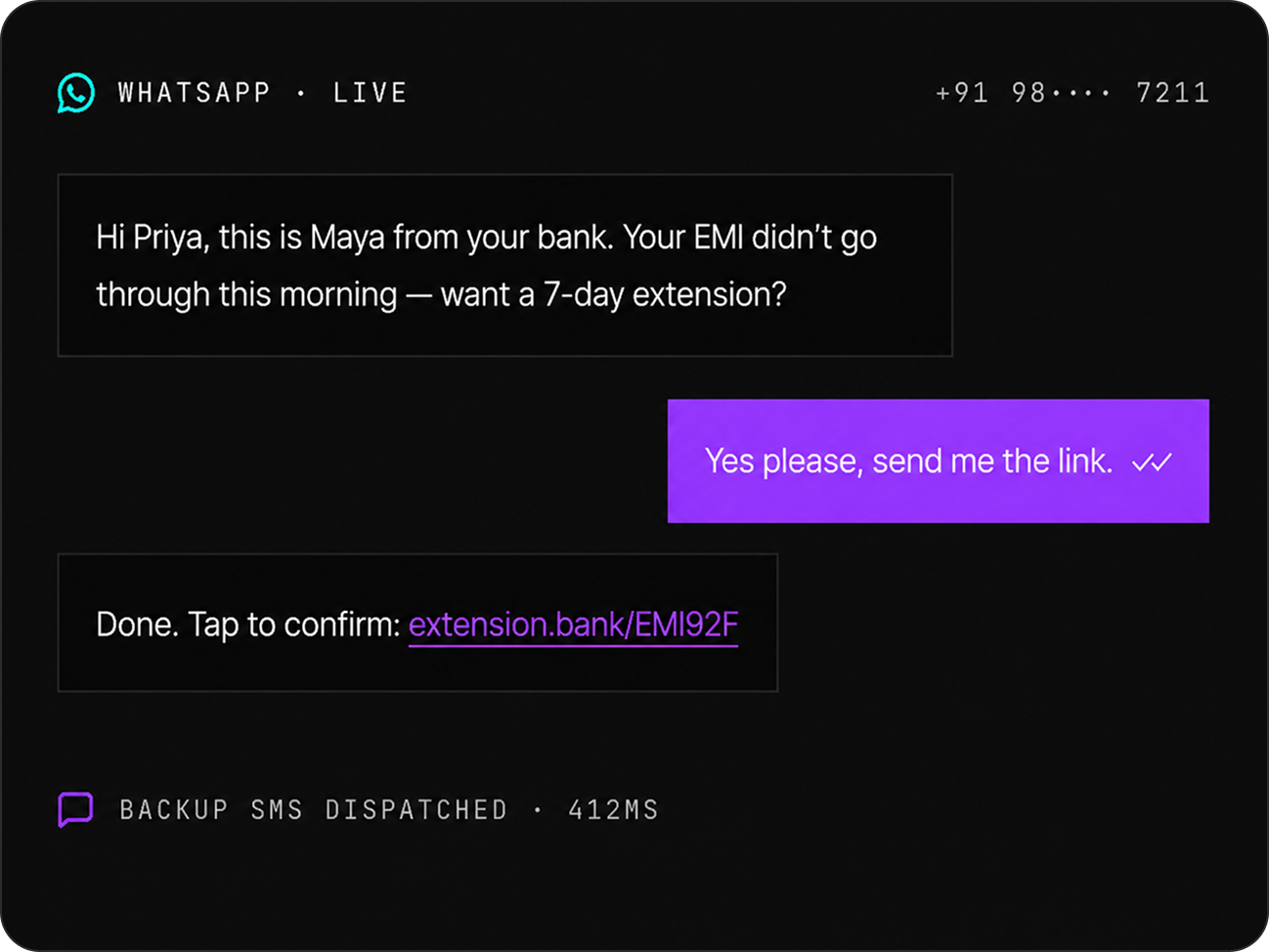
SMS and WhatsApp flows, spun up from a prompt.
Wire conditional messages, sequence triggers, and event-based actions across SMS and WhatsApp. No drag-and-drop builders. No manual steps. Just instruct the agent.
- Branch flows by reply, intent or sentiment
- Schedule retries with smart back-offs
- Sync results into your CRM
/ / Use cases
Pick a job. Hand it to your agent.
Real outcomes teams ship on Exotel MCP, from collections to verification.

Collections
EMI reminders, payment recovery, restructured-plan outreach.
"Call all overdue customers and offer a 7-day extension."

Customer support
Inbound triage, status checks, mid-call DB updates and handoffs.
"Triage tickets, resolve refunds under ₹500 on the call."

Sales outreach
Warm leads, cross-sell, win-back. Personalized at scale.
"Re-engage churned users with a personal offer."

Appointment booking
Confirm, reschedule, and remind without a single human dial.
"Confirm tomorrow's appointments, reschedule no-shows."

Onboarding
Welcome calls, document checks, activation nudges.
"Welcome new users, walk them through KYC."

Verification
Order-confirms, delivery checks, OTP-light identity flows.
"Verify delivery addresses for tomorrow's shipments."
/ / Outcomes that you can expect
What teams actually see after switching.
Real lifts from real deployments — collections, support, sales, onboarding. Measured in the first 90 days on Exotel MCP.
70%
Lower cost per conversation
vs. human-led outbound, by routing routine intents through MCP agents and reserving humans for exceptions.
10x
Faster to first live call
Teams go from idea to a working voice agent in under an hour. Old way: weeks of integration sprints.
2.3x
Higher answer-to-resolution rate
Agents update CRM mid-call and complete the task on the same call — fewer callbacks, fewer drop-offs.
+34pp
Collections recovery uplift
Personalized, intent-aware EMI outreach beats generic IVR blasts by a wide margin in pilot cohorts.
< 60min
From prompt to production
Connect Claude (or any MCP client), describe the job, ship the flow. No code reviews, no DevOps tickets.
100k+
Concurrent calls, on tap
Bursty campaigns auto-scale on the same platform that powers 25B+ interactions a year.
* Aggregated from anonymized pilot cohorts across collections, BFSI support, and consumer onboarding. Your mileage will vary.
/ / Recognition
Don't take our word for it, take theirs.

Conversational AI · Leader

CPaaS · Recognized vendor
Forbes DGEMS
Featured: India's first agentic AI voice call
G2
Leader, Contact Center · CPaaS
/ / FAQs
Frequently Asked Questions
/ / Ready when you are
You are one prompt away from a live
Voice Agent call.
Describe the task. Watch a voice agent go live in minutes. Connect with your customers.