



Patients need answers, and they need them now.
Healthcare is under pressure to deliver instant access, 24/7 availability, and flawless service. People expect support at their fingertips, whether it’s a symptom check at midnight or a follow-up query after a consultation. But human teams can’t always keep up.
That’s where AI healthcare chatbots step in.
These intelligent digital assistants are changing how care is delivered. These tools handle symptom checks, appointment bookings, and insurance questions without needing a human agent. In fact, experts predict the healthcare chatbot market will grow to over $1.7 billion by 2032, growing at a CAGR of 20.5%.
That clearly indicates that more patients and providers are relying on them.
In this blog, you’ll find 10 healthcare chatbots that actually deliver, along with their benefits and use cases.
What is an AI Healthcare Chatbot?
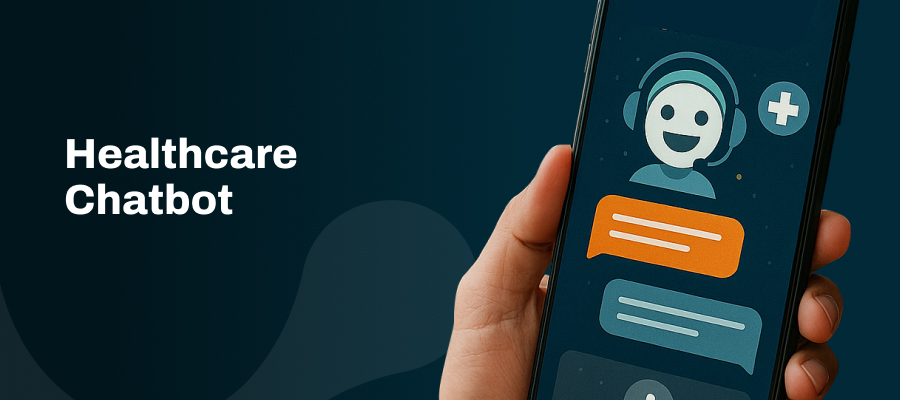
An AI healthcare chatbot is a virtual assistant that uses AI to provide telehealth services through text-based interactions on your devices. It understands natural language, responds instantly, and helps users complete tasks like symptom checks, appointment scheduling, and prescription queries.
Unlike general-purpose chatbots, these are built specifically for healthcare. They combine medical data with conversational intelligence to deliver timely, relevant, and secure support to both patients and providers.
Benefits of AI Healthcare Chatbots
If you’re wondering why so many providers are turning to chatbots, the answer is simple: they deliver tangible results. The top benefits of AI healthcare chatbots include:
1. 24/7 Availability
Healthcare concerns can pop up anytime. With AI chatbots, you can get answers and advice whenever you need them, even outside the clinic hours. Quick support can make a big difference when timing matters.
2. Personalized Responses
AI chatbots learn about users’ medical history, habits, and health needs. They use this information to offer care plans, reminders, and advice that actually fit your condition.
3. Faster, Smarter Data Collection
When users share symptoms or past conditions, chatbots store and organize this information for future use, i.e., each interaction becomes a data point. You get fast, accurate guidance without spending time searching for answers yourself.
4. Better Patient Engagement
First impressions matter. Chatbots respond instantly, are easy to interact with, and offer clear, personalized help. Patients get quick answers without confusion or delays, building better trust from the start.
5. Reduced Workloads and Costs
Chatbots handle appointment bookings, basic care advice, and routine questions without needing extra staff. This saves your healthcare team time and cuts operational costs while keeping care affordable.
6. Scalability in Busy Times
During the pandemic, healthcare chatbots helped manage massive surges in patient queries. Even today, they answer multiple questions at once, reduce wait times, and give you quicker access to the support you need.
Use-cases of AI Healthcare Chatbot
AI healthcare chatbots answer basic questions and support real clinical and administrative tasks.
Here are some practical ways you can use them to improve both patient experience and operational performance.
1. Scheduling Appointments
If your phone lines are ringing constantly for booking appointments, it’s time to use an AI healthcare chatbot. It allows patients to book, reschedule or cancel appointments as per their schedule without having to wait. Chatbots can also make the experience more personal by conversing in a human-like manner.
2. Checking for Symptoms
AI chatbots can help patients check their symptoms at ease. Once all the data is gathered, the chatbots can recommend therapy or medication or refer to an appropriate doctor. Patients can also get personalized advice to improve their health.
3. Coverage and Claims
Insurance claims can be stressful and complicated, and not something the patient enjoys dealing with, especially during a health crisis. AI chatbots can help patients with insurance claims by providing relevant information on coverage, billing, and other patient queries. It also helps patients determine the details of the medical services available.
4. Medication Management
With access to large databases, AI healthcare chatbots pull information to provide patients with accurate information. This saves time and reduces the need for doctor visits, especially for minor ailments. Chatbots can also be trained to offer therapy to patients with depression, PTSD, and anxiety.
5. Automated Prescription Refills
You can use chatbots to manage prescription refills. They check with pharmacies for pickup or delivery updates. The chatbots can also notify you when your prescription is ready, allowing hospital staff to focus more on patient care than paperwork.
6. Wellness Programs Recommendations
Chatbots can use sentiment analysis and NLP to recommend healthcare plans and wellness programs that fit your needs. This helps more patients enroll in the right programs and more actively manage their health.
Top AI Healthcare Chatbots
Use this table to shortlist platforms before reading the detailed entries below.
| Platform | Primary Use Case | Omnichannel | EHR / CRM Integration | Multilingual | Best For |
| Exotel | Appointment booking, prescription mgmt, insurance queries | Yes (voice, chat, SMS, WhatsApp, bots) | Yes | Yes | Healthcare providers needing voice + chat unified on one platform |
| Youper | Mental health support (anxiety, depression) | App only | Limited | Limited | Patients seeking accessible mental health self-management |
| Florence | Medication reminders, health tracking | Facebook Messenger, Skype, Kik | No | Limited | Patients needing adherence and symptom monitoring support |
| Healthily | Symptom checking, self-care guidance | iOS, Android, web, Messenger | No | Yes | Consumer self-care and health information |
| Sensely (Molly) | Symptom assessment, care navigation | Speech, text, image, video | Yes (clinical models) | Limited | Providers needing clinical decision support at triage |
| Buoy Health | Symptom checking, health assessment | Web | Limited | English | Consumer-facing health guidance with clinical review |
| Ada Health | Symptom assessment, health library | iOS, Android | Limited | Yes (6+ languages) | Global consumer deployment requiring multi-language support |
| Infermedica | Triage, care routing, pre-consultation | Web, mobile | Yes (API-first) | Yes | Healthcare providers integrating AI triage into existing workflows |
| Woebot | Mental health (CBT, DBT, IPT) | App | Limited | English | Patients needing structured mental health self-management |
| OneRemission | Cancer recovery support | App | No | Limited | Cancer patients and survivors managing recovery |
1. Exotel
Exotel’s AI healthcare chatbot helps you deliver faster, more personalized patient support. It automates routine tasks, protects patient privacy, and improves how you manage care. You can handle appointment booking, prescription management, and patient communication without adding pressure on your staff.
Top Features:
- Appointment Scheduling and Reminders
Patients can book, reschedule, or cancel appointments through the chatbot. It syncs with your calendar and sends reminders automatically. You reduce no-shows and manage your time better. - Private and Secure Patient Communication
Exotel uses number masking to protect patient identities. You keep every conversation private and build more trust with your patients. - Prescription Refill Management
Patients easily request prescription refills. The chatbot checks with pharmacies and updates when medications are ready, saving you and your patients time. - Insurance and Billing Support
The chatbot answers insurance coverage, pre-authorization, and billing questions. This simplifies complex processes and reduces your team’s workload. - Handling High Query Volumes
During busy periods like flu season, the chatbot manages large volumes of patient questions. You make sure every patient gets timely information without delays.
Exotel is the only platform in this list that unifies voice calls, chat, and SMS into a single patient communication layer. If your front desk still handles a high volume of inbound voice calls alongside digital queries, see how Exotel’s healthcare and pharma solutions handle both without separate tools.
2. Youper
Youper is an AI-powered mental health chatbot that helps users manage anxiety, depression, and emotional well-being. It offers immediate, private support and is especially useful if you’re looking for accessible mental health tools.
Top Features:
- Assesses users’ emotional state and tailors support
- Uses proven CBT methods to help users manage anxiety, depression, and stress
- Tracks mood daily and provides insights
- Accessible anytime for instant mental health support
3. Florence
Florence is like a personal nurse who supports patients through automated and personalized messaging. It assists with medication reminders and health tracking and provides information on various health topics.
Top Features:
- Sends timely prompts to help patients adhere to their prescribed medication schedules.
- Allows users to monitor health indicators such as weight, mood, and menstrual cycles
- Operates on platforms like Facebook Messenger, Skype, and Kik
- Provides basic assessments to help users understand potential health issues
4. Healthily
Healthily (formerly Your.MD) is an AI-powered health assistant designed to help users manage their well-being. It offers tools like symptom checking, health tracking, and personalized guidance to support the user’s self-care journey.
Top Features:
- Utilizes AI to analyze symptoms and provide information on potential conditions and next steps
- Offers tailored advice based on user inputs
- Available on iOS, Android, Facebook Messenger, Slack, KIK, Telegram, and web browsers
- Provides information reviewed by medical professionals
5. Sensely
Sensely’s AI chatbot, Molly, can assess the patient’s symptoms using speech, text, images, and video. It offers personalized communication to improve health outcomes and streamline user experiences.
Top Features:
- Utilizes trusted clinical decision models to help patients navigate to the appropriate care
- Provides an assortment of vetted health and wellness articles, tips, and best practices
- Establishes baselines and understands health needs using a clinical assessment
- Uses disease-specific clinical routines to help clinicians manage patient populations
6. Buoy Health
Buoy Health is developed by doctors and computer scientists to help individuals understand their symptoms. It utilizes advanced algorithms and extensive medical data to provide personalized health assessments and guidance.
Top Features:
- Utilizes advanced algorithms to analyze symptoms and provide personalized health assessments
- Offers tailored advice based on individual symptoms and medical history
- Provides articles and resources reviewed by medical experts to ensure accurate and reliable information
- Features an intuitive design that makes it easy for users to input symptoms and receive guidance
7. Ada Health
Ada Health can assess the user’s health based on reported symptoms. It asks personalized questions and analyses responses to provide insights into potential conditions.
Top Features:
- Uses AI to evaluate user symptoms and suggest possible causes
- Offers tailored advice based on user input
- Offers a comprehensive library of health information created by doctors
- Available in multiple languages, including English, German, Spanish, Portuguese, and French
8. Infermedica
Infermedica is a Poland-based health tech company that operates online and on mobile phones as an AI healthcare chatbot. The platform helps healthcare providers deliver efficient care to patients.
Top Features:
- Utilizes ML to assess symptoms and provide personalized care recommendations
- Guides patients through a structured assessment to determine the urgency and level of care needed
- Directs patients to the most suitable healthcare provider based on their symptoms and needs
- Collects essential patient information before consultations to streamline the care process
9. Woebot
Woebot offers support to help users cope with their mental health. It uses Cognitive Behavioral Therapy (CBT) techniques to help users manage mood, anxiety, and stress.
Top Features:
- Live chats with users to help them explore thoughts and emotions
- Utilizes CBT, Interpersonal Psychotherapy (IPT), and Dialectical Behavior Therapy (DBT) strategies
- Allows users to monitor and reflect on their emotional states
- Offers tailored responses and coping strategies based on user input
10. OneRemission
OneRemission supports cancer patients and survivors in their recovery journey. It was developed by Keenethics, a platform offering personalized guidance on diet, exercise, and post-cancer practices.
Top Features:
- Provides tailored advice on nutrition, physical activity, and lifestyle changes
- Allows users to consult with online oncologists at any time
- Offers a curated collection of information on cancer-related risks, benefits of various food products, and post-cancer care practices
- Assists users in understanding and managing their emotions during the recovery process
How to Choose a Healthcare Chatbot for Your Organisation
The platforms above serve different needs. Before evaluating vendors, answer four questions that will narrow your shortlist considerably.
- What is the primary channel your patients use?
If the majority of your patient contacts arrive via phone calls, you need a platform with a voice AI layer, not just a chat widget. Most healthcare chatbot vendors are chat-first. Exotel is the exception that handles voice and chat from a single system.
- Does it need to integrate with your existing systems?
A chatbot that cannot read from or write to your appointment scheduling system, EHR, or pharmacy platform will create manual workarounds. Confirm the integration before the demo, not after.
- What are your compliance and data residency requirements?
Healthcare data is governed by strict rules. In India, the Digital Personal Data Protection Act, 2023 sets obligations on how patient data is stored and processed. Confirm that the vendor can meet your specific regulatory requirements, including data residency within India if required.
- Is the use case clinical or administrative?
Administrative use cases, such as appointment booking, prescription refills, and billing queries, have clear success metrics and lower regulatory risk. Clinical use cases, such as symptom triage and mental health support, carry greater liability and require closer oversight of the AI outputs. Start with administrative use cases if you are deploying for the first time.
Offer Unmatched Healthcare Support with Exotel
Healthcare is moving toward faster, more patient-focused care. Digital tools, AI, and real-time engagement are now essential. Exotel helps you stay ahead by connecting patients and healthcare providers through secure, automated communication across multiple channels.
Book a demo now to witness the power of AI chatbots to make your healthcare more accessible.
Frequently Asked Questions
How are Chatbots Helping Doctors?
AI healthcare chatbots can help doctors by automating routine tasks and providing quick access to patient data and history.
Are Tips from an AI Healthcare Chatbot Trustworthy?
Healthcare chatbots are designed to provide safe and helpful advice. However, it’s best to ask a real doctor for complex issues.
Can AI Healthcare Chatbots Replace a Doctor?
No, it cannot. Chatbots can offer basic help or answer simple questions but cannot be compared with real doctors.
What tasks can a healthcare chatbot handle without human involvement?
Healthcare chatbots can fully automate appointment booking, cancellation, and rescheduling; prescription refill requests; insurance coverage and billing queries; medication reminders; symptom pre-screening for triage; and post-consultation follow-up messages. Tasks that require clinical judgement, such as diagnosing a condition or adjusting a treatment plan, should always involve a qualified clinician.
How do healthcare chatbots handle patient data securely?
Reputable healthcare chatbot platforms encrypt data in transit and at rest, apply role-based access controls, and offer number masking to protect patient identity in conversations. Before deploying any platform, confirm it complies with the Digital Personal Data Protection Act, 2023 in India, or the relevant framework in your jurisdiction. Ask the vendor specifically about data residency, audit logs, and breach notification procedures.
What is the difference between a rule-based chatbot and an AI healthcare chatbot?
A rule-based chatbot follows a fixed decision tree. It answers predictable questions well but fails as soon as the patient deviates from the script. An AI healthcare chatbot uses natural language processing to understand intent, so it handles variations in phrasing, context switches mid-conversation, and follow-up questions. For healthcare, where patients rarely describe symptoms or queries in uniform language, AI-based systems significantly outperform rule-based ones in deflection rate and patient satisfaction.
How long does it take to deploy a healthcare chatbot?
A basic FAQ and appointment-booking chatbot can go live in two to four weeks. A deployment with EHR integration, multilingual support, and custom clinical workflows typically takes six to twelve weeks, including integration testing and staff training. Platforms with no-code workflow builders sit at the lower end; bespoke enterprise deployments with API-level EHR integration sit at the upper end.